
A Discovery That Contributed to the Success of Surgical Operations Worldwide


Patients would leave the operating room in good health, only for their conditions to deteriorate weeks later. No one could explain why.
The surgical procedures had been performed successfully, and the wounds had healed.
Yet, weeks later, patients would develop pain, scarring, and unusual tissue masses. Surgeons repeatedly encountered these abnormalities when they were forced to reopen surgical wounds. At the time, the medical community had no clear explanation for these mysterious complications.
Until a young woman from rural Falls County discovered the answer.
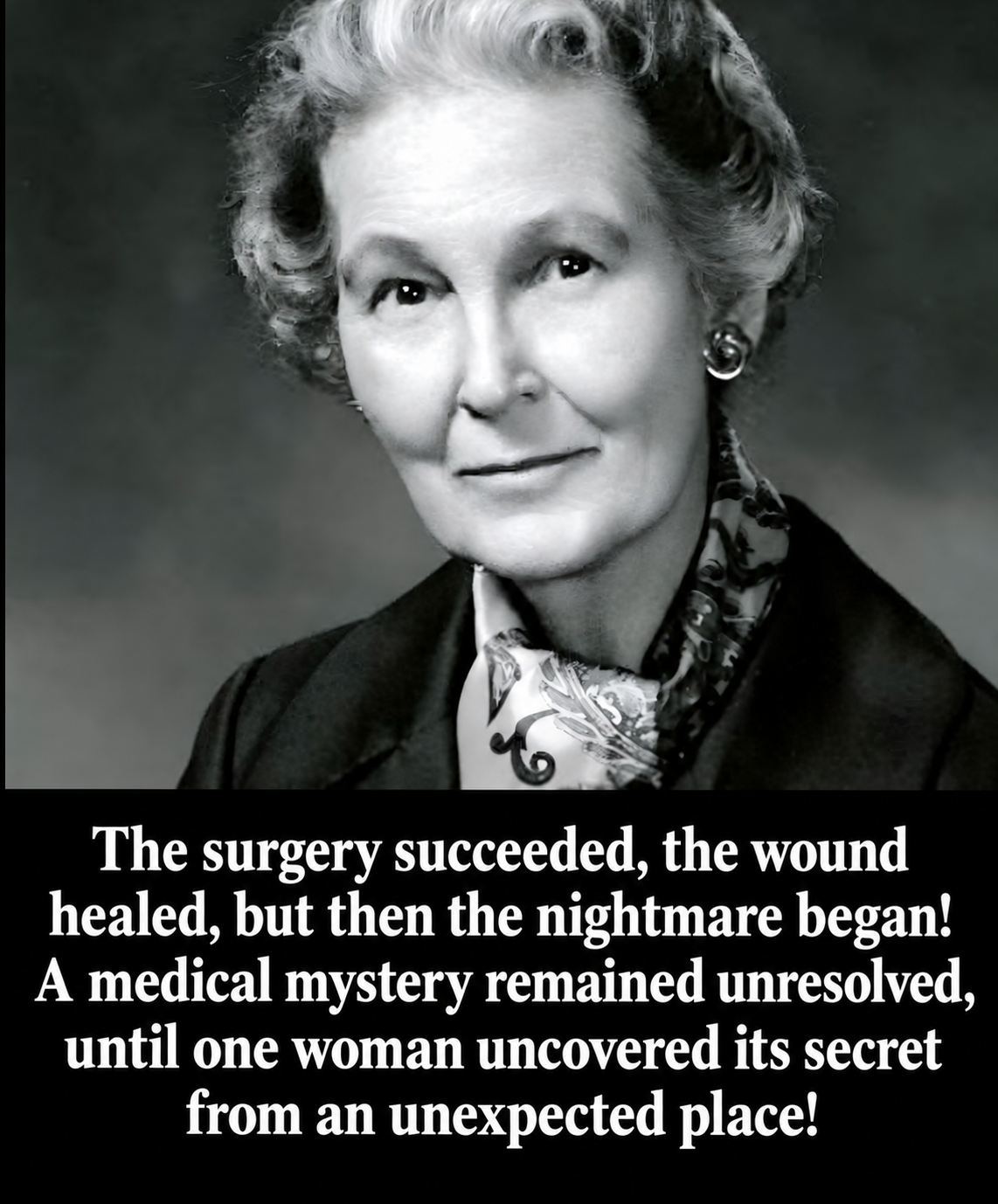
Her name was May Owen.
Growing up under difficult circumstances, Owen worked tirelessly to finance her education. She eventually established herself as a pathologist in the laboratories of Fort Worth, Texas, where she spent her days examining tissue specimens after surgeons had completed their procedures.
Over time, she began noticing the same unusual findings in tissue samples that should never have exhibited similar abnormalities.
Through persistence, meticulous observation, and painstaking research, she finally identified the culprit.
It was the last thing anyone would have suspected.
The talcum powder inside surgeons' gloves.
Talc, a substance composed of magnesium silicate, was commonly used to make surgical gloves easier to put on and remove.
However, tiny particles of this powder could enter patients' bodies during surgery. Once inside, the immune system reacted to the foreign material, attempting to isolate it by forming scar tissue, inflammatory masses, and adhesions around it.
Owen published her research on this phenomenon in 1936.
The problem was not necessarily the surgical procedure itself.
It was the gloves.
That was the remarkable discovery made by this pioneering pathologist.
Owen spent the remainder of her extraordinarily long professional career in Fort Worth, becoming the first woman to serve as president of the Texas Society of Pathologists, followed by the Tarrant County Medical Society, and ultimately the Texas Medical Association.
She continued practicing pathology until her death at the age of 96.
It took the medical community many years to move away from the use of talcum powder in surgical gloves. Other powders, including starch-based alternatives, were subsequently introduced before modern healthcare systems increasingly adopted powder-free surgical gloves.
Her discovery helped improve surgical safety and contributed to the success of countless operations around the world.
What made her achievement truly extraordinary was not simply that she discovered something others had missed, but that she paid attention to what everyone else had dismissed as an ordinary, harmless detail.
Sometimes, the greatest breakthroughs in medicine do not begin with revolutionary technologies or complex surgical techniques.
They begin with a careful observer who dares to question what everyone else takes for granted.